
Texas Nail License Guide

How to Get Your Texas Manicurist License: A Step-by-Step Guide

A Texas manicurist license turns nail care training into a license. This guide explains the core rules, training hours, exams, application steps, and renewal expectations for aspiring nail technicians in Texas.
Texas-focused guidance
License renewal support
TDLR-approved CE provider #2501
Texas nail technician student practicing manicure skills during state-approved training
Quick Answer

To become a licensed nail technician in Texas, an applicant generally needs to meet TDLR eligibility rules, complete the required nail technician training hours, pass the written and practical exams, submit the license application, and keep the license current through timely renewal.

Section 1

Start With the Basic Texas Manicurist License Requirements

First, before a future nail technician can legally provide manicure, pedicure, nail enhancement, or related nail services in Texas, the person must understand the licensing pathway set by the Texas Department of Licensing and Regulation.

Next, the process includes basic rules, approved education, exams, and a license application. These steps help protect clients. They also help future nail technicians understand sanitation, infection control, safe product use, and service standards.

Why the Basic Requirements Matter

For this reason, students should treat the license process like a checklist. Each step helps show they are ready to work safely and legally in Texas.

Most importantly, a nail license is not simply a formality. It is a license that confirms the individual has completed training and demonstrated readiness to work with clients safely.

Because of this, students should check each requirement early. A clear plan can prevent delays when it is time to apply, test, and begin working.

17+Minimum age commonly required
600Training hours commonly associated with Texas nail licensure
2Written and practical exam components
Texas nail technician student practicing manicure skills during state-approved training

Training builds practical readiness

Approved education helps students move from interest in nail art to client-ready technical, sanitation, and professional skills.

Section 2

Choose a Nail Technician Program That Fits the Licensing Path

Next, education becomes the foundation of the licensing process. A state-approved nail technician program helps students learn the technical, safety, and professional skills needed to work with clients in Texas.

In addition, students should compare schedules, tuition, location, hands-on practice, instructors, and exam support. A strong program does more than teach polish application.

It should also cover sanitation, nail disorders, client consultation, conduct, product safety, and business basics.

Because the licensing process depends on approved hours, students should verify that the school is properly authorized before enrolling.

They should also ask how the school tracks hours. In addition, they should confirm how the school supports graduates with exam scheduling and license application steps.

1

Research approved schools

Confirm the program aligns with Texas licensing requirements before committing time or tuition.

2

Compare schedule options

Look for full-time, part-time, evening, or flexible formats that match the student’s work and family obligations.

3

Evaluate hands-on training

Student salon experience can help build confidence before practical testing and paid client work.

4

Ask about exam support

Mock exams, study guides, and instructor feedback can make the licensing process more manageable.

Section 3

Prepare for the Exams and Submit a Complete Application

After completing the required training, students move into the exam and application phase. The written exam typically tests knowledge of regulations, sanitation, safety, and nail care theory. The practical exam is designed to assess whether the students can perform services safely and correctly.

How to Stay Organized Before Applying

Next, students should gather school records, identification, exam details, and fee information before starting the application. As a result, this can prevent avoidable delays.

In addition, students should review school materials, take practice tests, and study sanitation rules. They should also practice the steps expected during the practical exam.

Students should keep documents organized. This includes transcripts, identification, fees, and application details.

An incomplete or inaccurate application can delay licensing. Applicants should review every field carefully, submit required fees, and respond promptly if TDLR requests additional information.

Verify Current TDLR Rules Before Submitting

Finally, applicants should verify current licensing rules with the Texas Department of Licensing and Regulation before applying. TDLR provides official guidance for Texas manicurist licenses. This includes education, fees, exams, and eligibility details.

Review the official TDLR manicurist license application requirements.

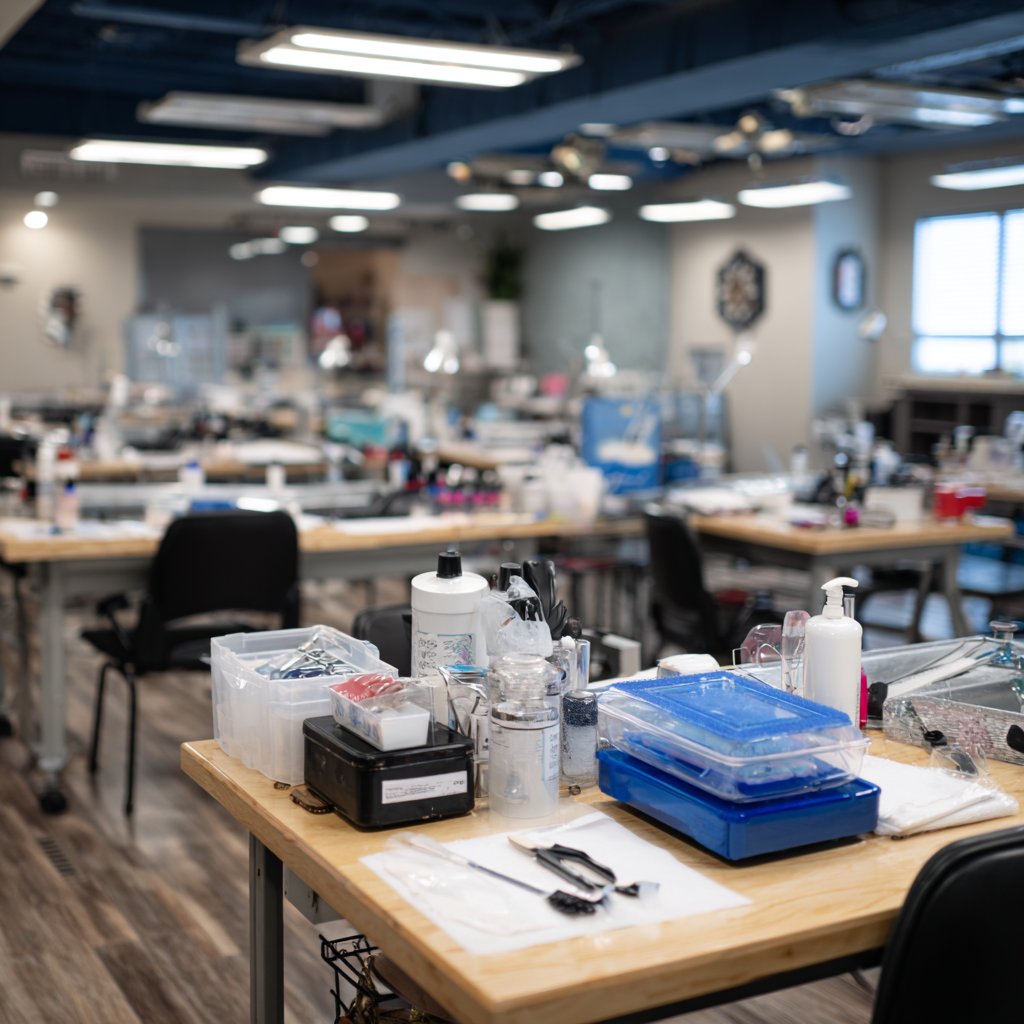
Texas manicurist license application checklist with nail technician tools and documents

Application organization matters

Keeping licensing documents, school records, and exam details organized can prevent avoidable processing delays.

Section 4

Build a Career and Keep the License Current

Once licensed, nail technicians can build careers in several ways. They may work in salons, rent booths, offer mobile services where allowed, or build an independent business.

They may also focus on advanced nail art, spa services, and long-term client relationships.

Professional success depends on more than technical skill. Nail technicians should also understand appointment management, sanitation routines, client communication, retail recommendations, service pricing, and local marketing. A strong online portfolio can help new professionals show their work and attract clients.

Plan Ahead for License Renewal

Finally, license maintenance is part of the career. Texas cosmetology-related licenses usually require renewal on a set cycle.

Professionals should track deadlines, renewal fees, and continuing education rules.

Letting a license expire can interrupt work. It can also create avoidable paperwork problems.

TDLR also publishes a scope of practice guide explaining which services may be performed by a licensed Texas manicurist and which license types may perform those services.

Read TDLR’s official manicurist scope of practice guide.

Renewal reminder: A licensed beauty professional should keep contact information current with TDLR, track renewal dates, and complete any required continuing education before the deadline.

Client trust

A valid license helps reinforce professionalism and credibility with salon clients.

Sanitation habits

Consistent cleaning and disinfection practices protect both clients and license holders.

Career flexibility

Licensed nail professionals may pursue salons, spas, specialty nail services, or business ownership.

Renewal planning

Tracking deadlines helps professionals avoid lapses that could interfere with work.

FAQ

Texas Manicurist License Questions

These frequently asked questions summarize the most common concerns for aspiring nail technicians in Texas.

What license is needed to do nails in Texas?

In most cases, a person needs a Texas manicurist or nail technician license issued through the state licensing process before legally providing nail services to the public.

How many training hours are required for a Texas nail license?

Currently, Texas requires 600 hours of approved nail technician training before a student can qualify for the licensing exams.

Does Texas require both a written and practical exam?

Yes. After training is complete, students must pass the required written and practical exams before they can receive a Texas manicurist license.

Can someone work as a private nail tech without a license?

No. Because of this, anyone who wants to provide nail services legally in Texas should complete the required training, exams, and licensing steps first. Working without the proper license can create compliance issues and may lead to penalties.

How does a licensed nail technician keep the license active?

After licensure, nail technicians should track renewal deadlines and complete any required continuing education. They should renew the license before it expires.

Stay Renewal Ready

Need Texas Cosmetology Continuing Education?

Texas Cosmetology License Renewals is a TDLR-approved continuing education provider, Provider #2501. Enroll online and complete the CE course required for eligible Texas cosmetology license renewals.

After becoming licensed, Texas manicurists should also stay aware of renewal and continuing education requirements. TDLR maintains official renewal guidance for barbering and cosmetology license holders.

Check TDLR’s official barbering and cosmetology renewal guidance.

TDLR-approved provider #2501
Online course access
Built for Texas license renewal
Professional CE support
Enroll Now